

Key Takeaways:
- Grocery prices have risen nearly 30% over the past five years, but planning meals in advance and shopping with a focused list can help you avoid impulse buys and reduce food waste.
- Strategic choices like buying seasonal produce, choosing frozen options when fresh is expensive, rotating in budget-friendly proteins like beans and eggs, and comparing unit prices can significantly lower your weekly grocery costs.
- Small changes, such as reducing food waste through planning, exploring generic brands, and using grocery apps wisely, can help you adapt to rising prices without sacrificing nutrition or the foods you enjoy.
that {{mid-cta}}
If you’re feeling the pinch of high food prices right now, you’re far from alone. In the past five years, grocery prices have risen by almost 30 percent and are expected to rise by at least another 3 percent this year.1,2
While inflation may be out of your control, your ability to maximize your grocery budget isn’t. In this article, we’re sharing real-life examples of how you can reduce your food costs while eating nutritious foods that support your health goals.
Why Grocery Bills Are Rising
We expect food costs to rise with inflation, but recent years have brought multiple challenges that have driven food prices to increase rapidly.
The price you pay for food at the grocery store reflects the costs of manufacturing, packaging, shipping, and storage, as well as shifts in supply and demand for various foods. There is little you can do to control inflation and the current challenges facing the food system while you make your weekly grocery list. But with these tips, you can reduce your food costs while eating well and supporting your health each week.
Start With a Weekly Meal Plan
The very best way to stick to your grocery budget is to make a plan. By knowing what and how many meals you need to make, as well as what you already have in the house and what you need to buy to make those meals, you can avoid impulse buys, overbuying, and wasting food you “meant to eat” but didn’t have a plan for.
Whether you create a list with a few options you can easily throw together or have a color-coded menu with each meal assigned to a day and time is up to you, but make sure you have some sort of plan.
Here are some suggestions to make the most of your meal plan:
- Decide how many meals you’ll need to make. Will you rotate through 1-2 breakfasts each week, 2-3 lunches, and make 4 meals with 3 nights of leftovers? Or will you eat the same breakfast all week, make 7 dinners, and heat up leftovers for lunch? Whatever works for you, make sure you document it.
- Shop your kitchen first. Review your refrigerator, freezer, and pantry to identify items that need to be used up. This can help you reduce waste and lower your grocery bill.
- Build your meals around sales and seasonality. You can save the most when you plan your protein and produce around what’s on sale and what’s in season. In-season produce is often much fresher and cheaper, while you can save big by buying protein in bulk when it’s on sale and freezing individual portions for later.
- Plan to reuse ingredients and leftovers. This way, you can take advantage of lower costs and prep time while still eating a variety of unique dishes. For example, if sweet potatoes and chicken are on sale this week, you could make chicken tacos one night, sweet potato and chicken stew another, and use sweet potatoes in a breakfast hash, while lunch includes a chicken salad.
- Lean on affordable and convenient staples. Beans, grains, lentils, frozen vegetables, and canned vegetables are budget-friendly ways to increase a meal's fiber, vitamins, and minerals. You can make beans, grains, and lentils from scratch for pennies per serving, and keeping a few canned or pre-cooked options in the pantry can help you get dinner on the table when time is tight.
Shop With a Grocery List…and Stick to It
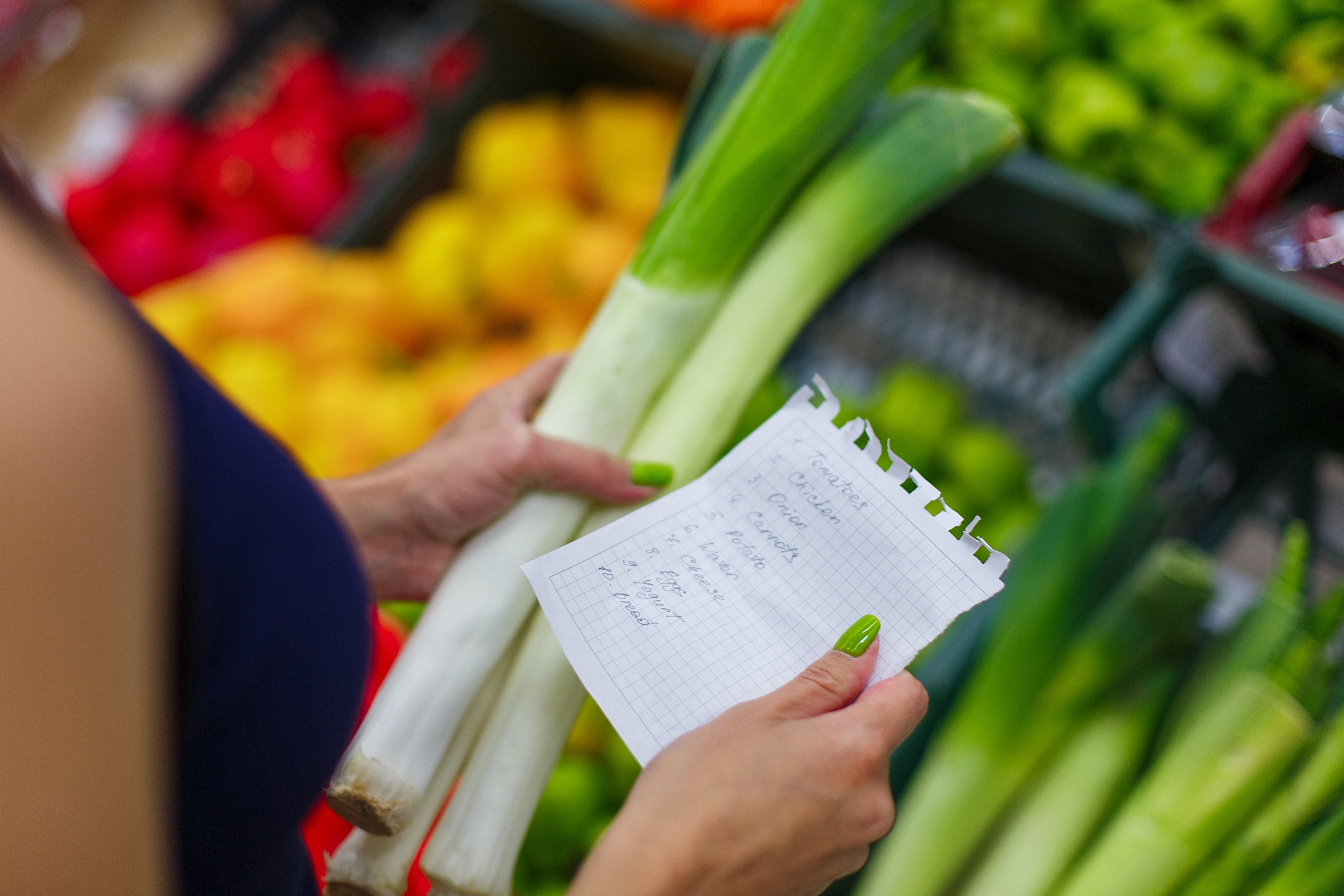
Now that you have your plan, create your list by double-checking what you need against what you already have, and commit to buying only what’s on the list.
If you know you fall prey to impulse purchases the moment you walk into the grocery store, consider using an online grocery ordering system. While you have less control over things like the quality of fresh produce that’s put into your cart, it’s much easier to stick to your list when you’re not staring at a store full of potential options.
Many online ordering systems offer free curbside pickup to avoid delivery fees, but depending on your location and the store's distance, delivery may still be an affordable option.
If you plan to visit the store, plan your route in advance. Grouping your list by category can make it easier to skip right past the aisles you know you don’t need anything from. If you come across something not on the list, take a moment to determine whether it’s a need or a want before adding it to your cart.
In some cases, you may realize you actually do need an item that’s not on the list. This could include seeing milk and realizing you’re almost out but forgot to put it on the list, or finding ground beef on clearance that you can easily freeze and add to next week’s meal plan. But most often, you’ll find that it’s more of a want. In this case, add it to the bottom of your list and allow yourself to add it to next week’s grocery plan if you still want it then.
Buy Generic and Store Brands
Some brands deserve loyalty, but store brands often match name-brand quality at a much lower price. This is especially evident with pantry staples and frozen foods, but you’d be surprised how many other store-brand foods match in both quality and flavor.
When deciding between a name brand and a store brand, compare unit prices to determine whether the cost difference is reasonable. If you’re not sure you’ll like the option, try it with a smaller size so you don’t end up wasting a family-sized box of food you don't enjoy.
Use Grocery Apps, Rewards, and Subscriptions Wisely
Store loyalty programs, digital coupons, subscriptions, and pickup or delivery services can save you tons of money when used strategically. But, oftentimes, these services can actually make you spend more money than you might otherwise.
Be cautious when using your grocery apps and digital coupons to make your list, and look for discounts or deals to take advantage of as you put together your meal plan. If you find proteins or produce on sale that you can center your meal plan around, you’ll likely save a lot of money that week. If you add things to your list just because they’re “a great deal,” you’ll spend more.
Before signing up for a subscription service, carefully consider whether it will save you money in the long run. The rate at which you’ll use the service, as well as other perks it may offer that could save you money on things you’re already buying (like gas, streaming, etc.), may make the extra subscription fee worth the cost, or not.
Shop Seasonal, Frozen, and Bulk Foods
Creating your meal plans around seasonal, frozen, and bulk foods can drastically reduce your food costs while also amplifying the nutritional content of your meals. When produce is in season, and you can purchase locally grown fruits and vegetables, the reduced need for shipping and storage is reflected in lower prices. Not only is seasonal produce often cheaper, but eating food that’s recently been picked helps retain nutrients that may start to degrade due to long travel times and improper storage.
If you’re buying produce that’s not in season, consider stocking up on frozen or canned options, which are often cheaper, last longer, and may even be more nutrient-rich. Since produce is frozen or canned quickly after harvest, it often has higher levels of certain vitamins than fresh options you may find in stores.3
When stocking bulk foods, keep non-perishable items and items that can be frozen if not used before the expiration date to save money over time. Use the first-in, first-out method for storing bulk foods, so you work through the oldest items first. But if you won’t use the food before it goes bad, buying in bulk is just another way to waste food (and your money).
Rethink Protein Choices
Fitting quality protein into each meal is a win for your metabolism and satiety, but it can quickly drain your grocery budget if you’re not careful. In 2025, beef prices rose by 16.4% and are expected to increase by another 9.4% this year, while poultry and pork prices will see slight increases, and eggs are expected to decrease slightly.4,5
This may mean increasing egg, poultry, and pork production and using beef sparingly and strategically to reduce costs. Using canned or frozen proteins, such as canned tuna, frozen salmon fillets, or chicken breasts, can help you fit high-quality, healthy, lean proteins into your meal plan at a lower cost.
Animal proteins tend to be more expensive than plant proteins like beans, legumes, soy, and whole grains, but you don’t have to go completely plant-based to eat well on a budget (unless you want to!). By stretching your animal proteins across meals and using foods like beans, lentils, and non-starchy veggies to fill in and balance them, you can create high-protein, high-fiber, and highly filling, satisfying meals for a fraction of the cost.
Compare Grocery Delivery vs In-Store Shopping
Is it better to avoid the stores and pay a delivery fee, or to rely on self-control and stick to the list while shopping in-store? Only you can answer that question.
Grocery delivery is easy, convenient, and, in some cases, cheaper than driving to the store and shopping yourself. This is especially true if your grocery store run requires an extra trip into town you wouldn’t otherwise make, or if you have a history of impulse shopping.
But some grocery delivery services have price markups for online orders, charge a fee or subscription to use the service, and require tipping. All of these small fees can add up quickly, so you’ll want to consider each one before deciding which option works best for you and your budget.
If you find that ordering groceries on an app allows you to stick to the list and spend less money, but you don’t want to pay a delivery fee, see if your area grocery store offers online ordering with in-store or curbside pickup, and place your order for a time you know you’ll be traveling nearby already.
Common Grocery Budget Mistakes
So far, we’ve identified all the steps you need to take to make the most of your weekly meal planning and shopping experience so you can stick to your budget and prioritize nutrition, but there are still a few areas that may be unclear. These are some of the most common grocery budget mistakes and how to avoid them:
Shopping without a plan
Even if you’re not planning out every meal and snack you’ll eat that week, making at least a loose plan can help you hit the grocery store once instead of going back for the 1-2 things you forgot, leaving with a handful of impulse buys each time.
Create your plan, review what you already have, and make a list on paper or in a notes app on your phone. Not only does this reduce how often you head to the store, but it also helps you reduce food waste when you accidentally buy more of what you already have.
Buying convenience foods exclusively
Yes, prechopped and premade foods are more convenient, but that convenience always comes at a price. While it might make more sense for you to buy canned beans instead of soaking and cooking your own, you may find that the higher cost of pre-chopped veggies isn’t worth it when you can easily do it yourself.
You’ll face this decision for several items. Buy pre-made hummus or make your own? Use a salad kit or stock up on ingredients to make your own salads? Consider your time, energy, and food budget as you decide which convenience foods make sense for you and which you can prepare yourself.
Overbuying perishable items
A great deal isn’t so great if it goes bad before you have a chance to eat it. For many perishable items, you’ll want to stock up only as much as you can eat before they go bad, or come up with a plan for long-term storage.
To help reduce the amount of food (and your money) that ends up in the trash, set aside time each week to assess which foods are nearing the end of their shelf life and either use or freeze them to use later. Most fruits, veggies, and dairy can be frozen for 1-3 months without sacrificing quality.
Ignoring price-per-unit comparisons
When you're rushing through the grocery store, it's easy to grab the item with the lowest sticker price and assume you're getting the best deal. But that family-sized box might actually cost more per ounce than buying two smaller packages, or the store brand in a different size could be the real winner. You won’t know unless you compare the product's price per unit. Get in the habit of checking the unit price (price per ounce, pound, or count) on shelf tags, especially for items that are regularly on your grocery list.
The Bottom Line
You don’t have to resort to extreme couponing or cut out the foods you love to lower your grocery bill; you just have to plan and shop with a bit more intention. Planning meals in advance, shopping from a list, strategically using sales, and using rewards can reduce the impact of rising food costs without sacrificing nutrition. By optimizing your grocery shopping strategy, you can eat better, waste less, and save money.
Learn More With Signos’ Expert Advice
The foods you buy at the grocery store impact your budget, but they’re also the foundation for optimal energy, mood, and metabolic health. Signos can help you understand how different foods affect your glucose levels and overall wellbeing so you can make informed choices to feel your best.
Topics discussed in this article:
References
- Grocery prices have jumped up, and there’s no relief in sight. (2025, September 19). NPR. https://www.npr.org/2025/09/19/nx-s1-5539547/grocery-prices-tariffs-food-inflation
- Sweitzer, M., & Davidenko, V. (2025, April 25). USDA ERS - Summary Findings. Www.ers.usda.gov. https://www.ers.usda.gov/data-products/food-price-outlook/summary-findings
- Melancon, M. (2013, December 3). UGA study uses consumer behavior to determine whether fresh or frozen produce contain more nutrients | CAES Field Report. CAES Field Report. https://fieldreport.caes.uga.edu/news/uga-study-uses-consumer-behavior-to-determine-whether-fresh-or-frozen-produce-contain-more-nutrients/
- Dudlicek, J. (2025, December 22). Shoppers Still Hungry for Protein as Meat Prices Soar. Progressive Grocer. https://progressivegrocer.com/shoppers-still-hungry-protein-meat-prices-soar
- Sweitzer, M., & Davidenko, V. (2025, April 25). USDA ERS - Summary Findings. Www.ers.usda.gov. https://www.ers.usda.gov/data-products/food-price-outlook/summary-findings

.svg)


.webp)

.jpg)